


For years, concerns about cell towers have been dismissed as speculative. Now we have measurable human markers.
A newly published peer-reviewed study examined people living within 60 meters of mobile phone base stations and compared them to residents living more than 300 meters away. Researchers didn’t ask about headaches or sleep disturbances. They drew blood. They measured power density inside participants’ homes. They ran complete blood counts and analyzed immune cell subsets. And what they found was not subtle.
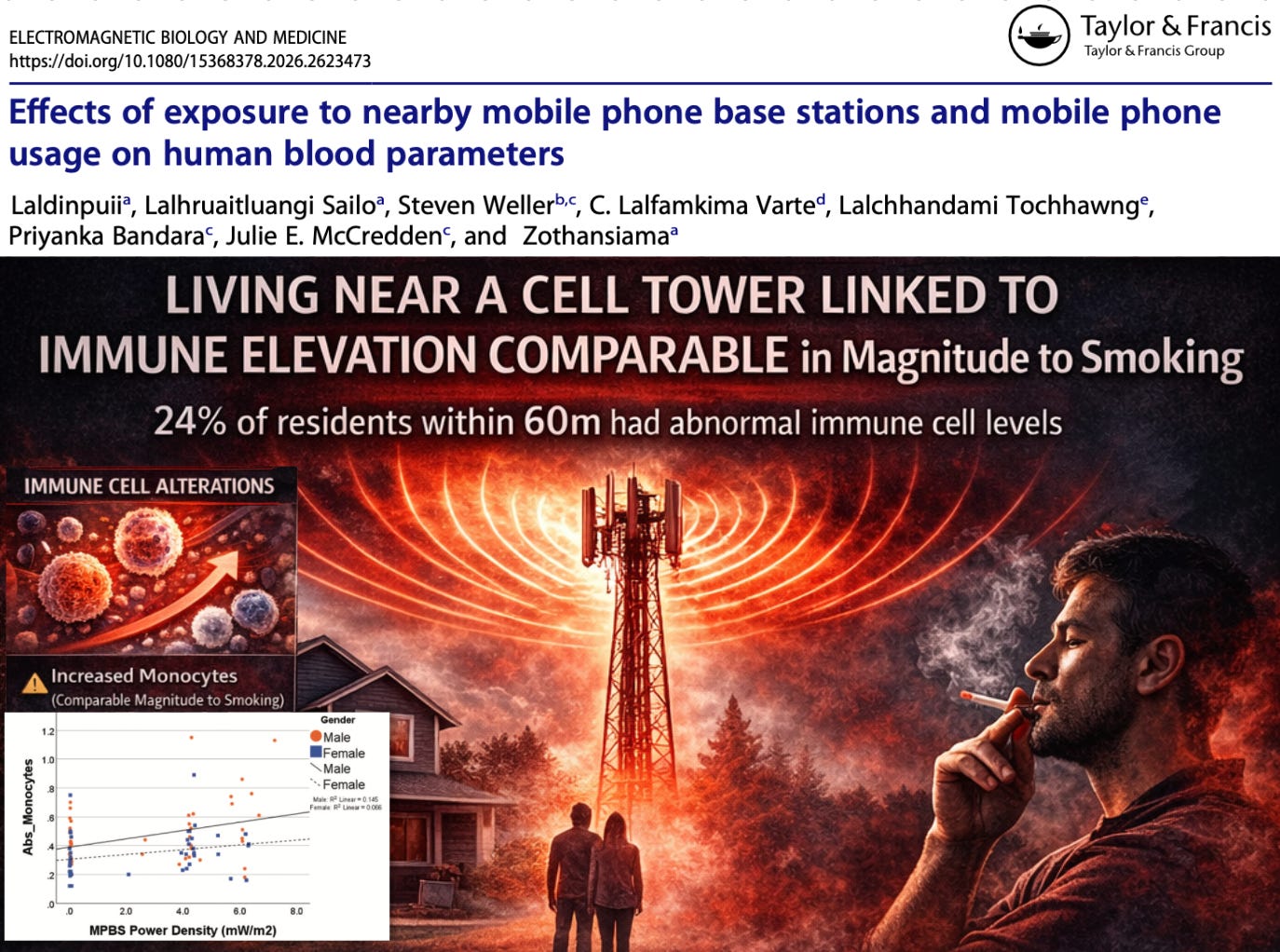
Higher exposure to cell tower radiation was linked to higher white blood cell counts at levels similar to what is seen in smokers. Among people living within 60 meters of a tower, 24% had basophil levels above what doctors consider normal, and most of those affected were under 30 years old. That’s nearly one in four residents showing an immune marker outside the healthy range.
And it wasn’t only about living near a tower. Heavy daily mobile phone use — particularly 4 to 6 hours per day — was also associated with noticeable immune changes. In that group, more than 50% had lymphocyte levels above normal reference ranges, again largely among younger adults. These are white blood cells involved in immune defense, and when they consistently rise above normal levels, it signals that the body may be responding to ongoing biological stress.
What Was Measured
The study evaluated 101 adults in total — 50 living within 60 meters of a mobile phone base station and 51 living more than 300 meters away.
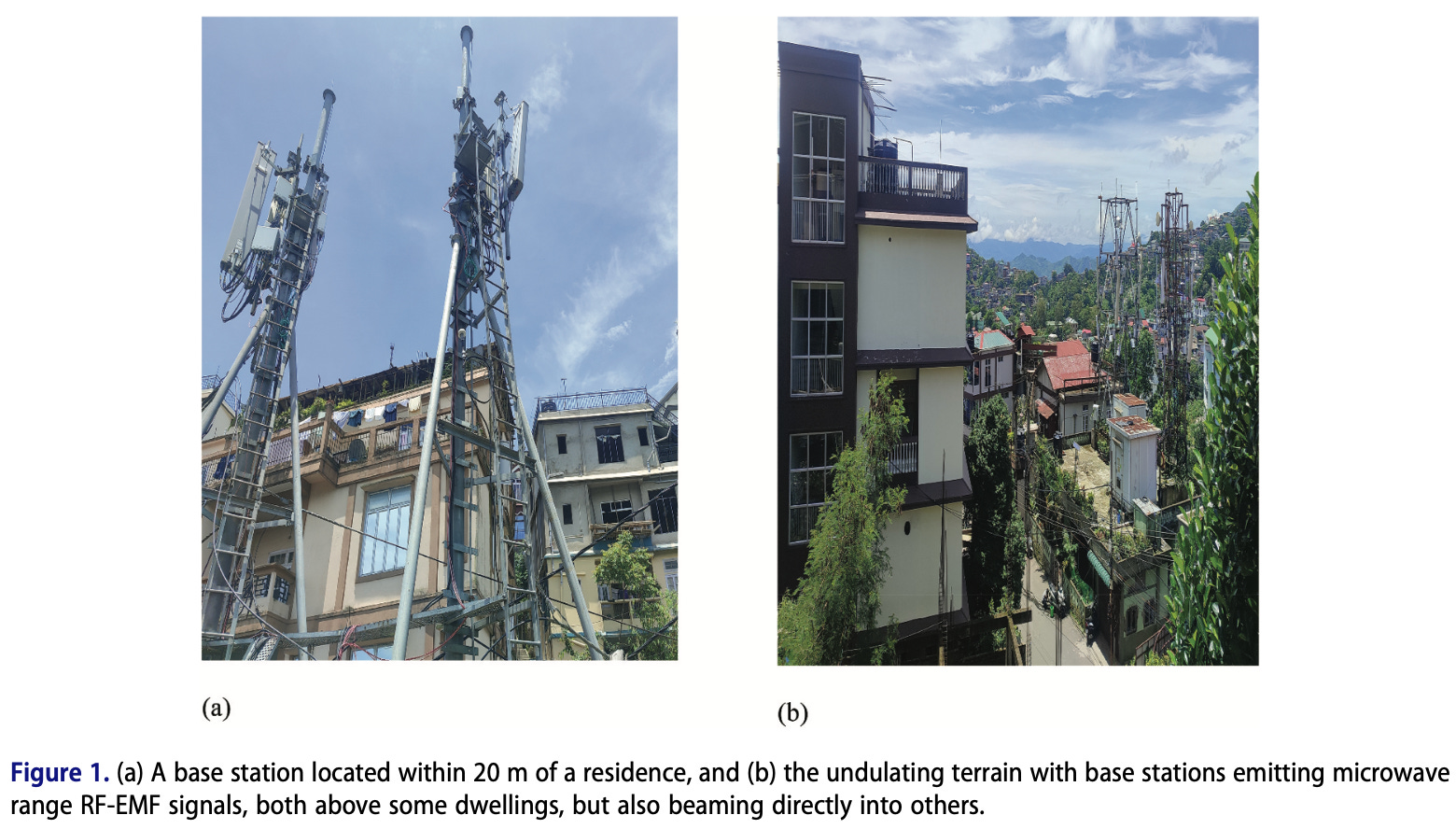
Researchers analyzed:
Total leukocyte count (TLC)
Differential white blood cells (basophils, lymphocytes, neutrophils, monocytes)
Absolute cell counts
Stress markers (amylase and cortisol)
In-home RF power density measurements
Participants in both groups were matched for:
Age
Gender
Smoking status
Alcohol use
Other lifestyle factors
This matters because white blood cells fluctuate for many reasons. Infection, stress, smoking, even minor inflammation can influence counts. The purpose of the design was to determine whether proximity to base stations — measured objectively by power density inside the home — independently predicted immune changes after accounting for those other variables. It did.
The Smoking-Level Immune Signal
The most striking finding involved monocytes.
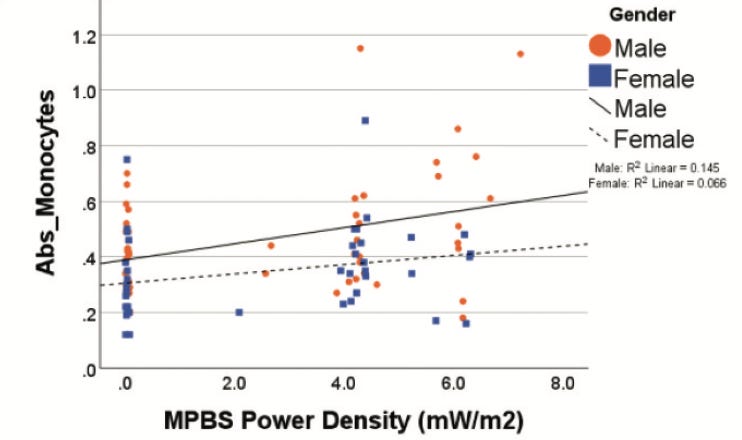
Monocytes are not just generic white blood cells. They are central players in systemic inflammation and vascular injury. They migrate into blood vessel walls and contribute to plaque formation. They are strongly associated with cardiovascular risk.
The study showed:
Higher RF power density from nearby base stations predicted higher monocyte counts.
The magnitude of that association was comparable to smoking.
That does not mean living near a tower is the same as smoking. But it does mean the immune system appears to be reacting in a comparable way.
Nearly 25% Had Abnormal Immune Values
Among residents living within 60 meters of a tower:
24% had basophil counts above clinical reference limits.
The majority were under 30 years old.
Basophils are involved in inflammatory signaling and hypersensitivity responses. When counts exceed clinical limits, it signals more than minor fluctuation.
Heavy Mobile Phone Use Showed Its Own Signal
The tower findings were not isolated. Daily mobile phone use also showed immune effects.
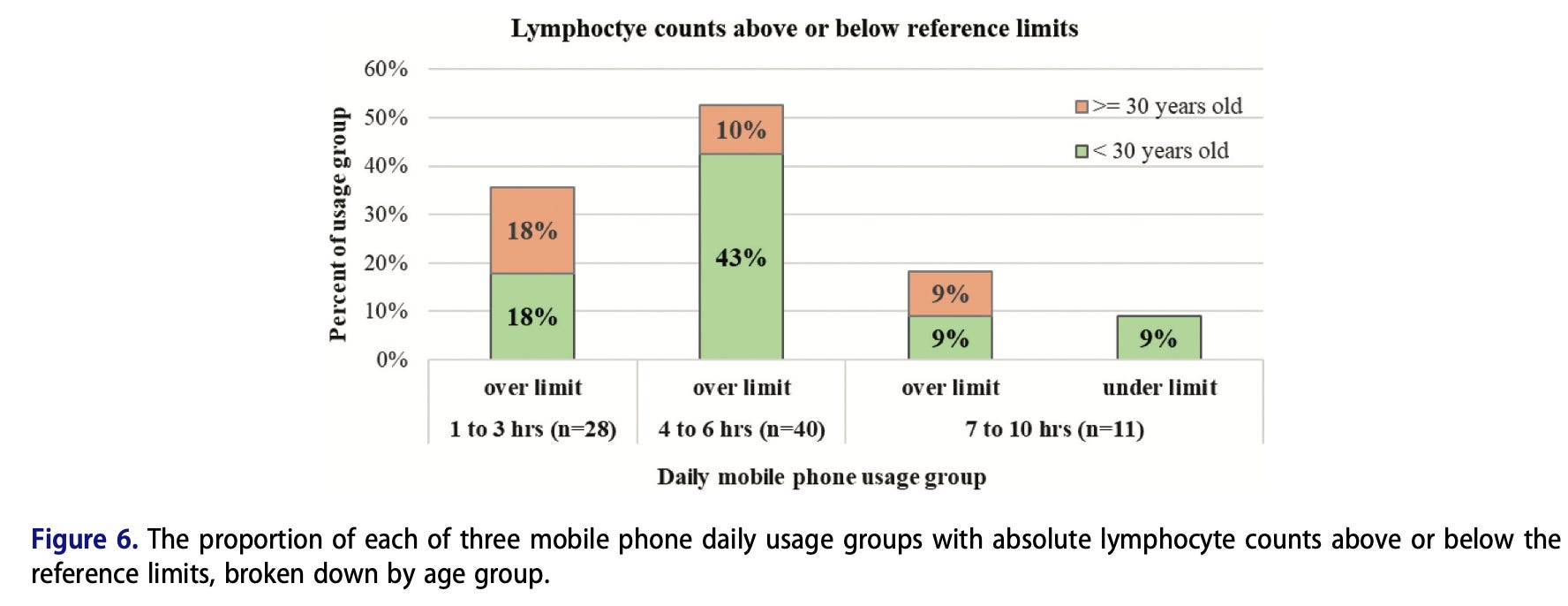
Among individuals using mobile phones 4–6 hours per day:
Over 50% had lymphocyte counts above reference ranges.
Most were under 30.
But the pattern was not linear. Researchers observed an inverted U-shaped response: lymphocyte levels increased with moderate-heavy daily use, then began to decline at the very highest levels of use. This suggests the immune system may initially ramp up in response to exposure, but with more prolonged stress, begin to show signs of dysregulation.
A Dose–Response Pattern
The data showed that higher in-home RF power density from nearby base stations was significantly associated with higher total leukocyte counts, as well as elevated basophils and monocytes.
In other words, as measured exposure levels increased, certain immune markers increased with them. These associations were statistically significant and remained after accounting for age, gender, and smoking.
That kind of exposure-response relationship strengthens biological plausibility.
White blood cells rise when the body detects stress. That stress can come from infection, physical injury, toxins, or other inflammatory triggers. In the short term, this response is normal and protective — it means the immune system is doing its job. But when white blood cell levels remain elevated over time, it tells a different story. Persistent elevation has been associated with cardiovascular disease, increased mortality risk, chronic inflammatory conditions, and autoimmune disorders.
When an environmental exposure is linked to sustained monocyte elevation, it suggests ongoing biological stress — even in people who otherwise appear healthy.
For decades, we built entire public health frameworks around smoking because of its inflammatory impact on the body. Now we have evidence that long-term proximity to cell towers may shift immune markers in a similar magnitude.
Yet there are no warning labels, no routine immune monitoring for residents, and no meaningful public health advisories.
This study suggests that, in a significant portion of people living near mobile phone base stations, the immune system is showing signs of stress significant enough to cross medical reference thresholds. The long-term implications of that signal demand serious attention.
As the authors conclude:
These results indicate human biological systems are under stress from both mobile phone use and local mobile phone tower exposures, leading to potential health effects. Placement and signal strength from mobile phone base stations, and guidance regarding daily mobile phone use need to be informed by these results.
Epidemiologist and Foundation Administrator, McCullough Foundation
Support our mission: mcculloughfnd.org
Please consider following both the McCullough Foundation and my personal account on X (formerly Twitter) for further content.
And didn't Trump just approve and fast track 6G? We are all up for deletion folks. They only want 500 million in the entire world...so that means killing off 8.5 billion of us.
There's a reason we own an EMF meter (which also measures RF & EF). The world is full-on electrified these days, and it's not a good thing for our biology!
Living many hundreds of meters from mobile phone towers is recommended. Do not move to places where there's one within 100m. This is not new research per se, as many studies have shown biological hazards from EMF/EF/RF, but this study certainly tested those biological markers - and came up with a very solid conclusion.
Mylar sheeting (space blanket) is pretty good at halving the RF & EF. We have some on our kitchen window. We measured the RF from the mobile phone tower in town before and after the mylar sheeting went up - and it halved it. It wasn't high to begin with, because we're about 2km from the tower, but even at 2km, there was still a reading. I'd rather be 5km from it and have limited reception, thanks! Who needs more RF in this day & age?! Mylar sheeting is also good to drape over your router. Only drape it loosely, because the router might get too hot under the mylar sheeting, otherwise. Yes, it will reduce the WiFi distance in your home/office by doing this, but if you only need it to extend so far, then this can be a good way to reduce that. I can now play the piano 3m from the router, and there is zero RF affecting me now. That's what our EMF meter reads!
To reduce EMF, you need to give space from the offending item (eg oven, smart meter, washing machine, fan etc), usually about 1.5-2 metres. EMF decreases exponentially, so a bit further away makes a huge difference! Solid metal sheeting also helps to shield you from EMF (eg try moving your gun safe in front of the wall behind where your smart meter is!). Also try to avoid standing in front of an oven that's on whilst using the cooktop above it. You're basically just frying your gonads and digestive organs!
Try using corded connections to the internet rather than using WiFi. Then you can turn the WiFi off and just use the ethernet cables.
And when on your mobile phone, use a cord, not those wireless earbuds, and have the phone at least 30-40cm away from you. Yes, the EF will still be up a little using a mobile phone with a cord BUT compared to the hideously high RF that mobile phones emit, it's a far lesser evil! Even once a phone has made a connection to a tower, it still 'checks in' with it now and then, and the RF spikes horribly. Also, right after sending or receiving a message/text/SMS/MMS, the RF spikes for maybe 10-15 seconds, so just wait a little bit when you get your phone ding to say you've got a message! Let the RF settle first! Basically, any time you're asking your phone to connect to a mobile phone tower, the RF spikes hugely. We've tested all this at home. Speakerphone is also OK, but again, keep the actual handset at least 30-40cm away from your body. Holding the phone whilst talking is still negatively affecting your biology. People seem to think they're being safer by not having the phone to their ear, but they're still holding the actual thing, so the body is STILL being exposed to the RF - just in a different body part!